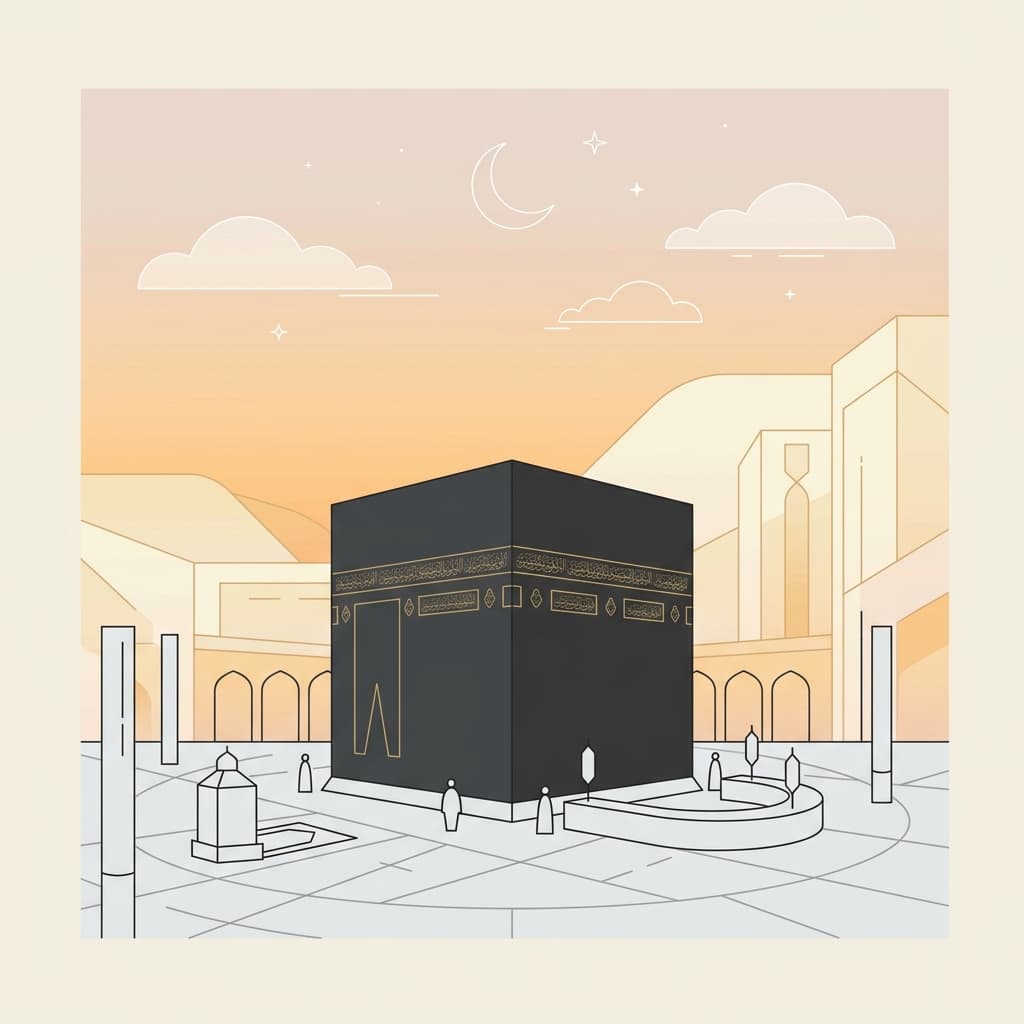
The Kaaba is the cuboid house in Makkah toward which Muslims face in prayer. In Islamic tradition, it was built by Prophet Ibrahim (Abraham) and his son Ismail (peace be upon them) as a house dedicated to the worship of the One God.
Scripture does not give a modern construction timeline like “X years of labor.” What it emphasizes is purpose: a center of monotheistic worship, pilgrimage, and unity.
Rebuilt across history
Over many centuries the Kaaba was repaired and reconstructed after floods and other damage. One well-known pre-Islamic rebuild occurred in the Quraysh era, when the Prophet Muhammad ﷺ famously settled a dispute about placing the Black Stone.
Later Muslim generations continued careful renovations while protecting the structure as a sacred site—not as an object of worship itself, but as a symbol of direction and unity for the ummah.
What matters most
For believers, the Kaaba’s value is spiritual orientation: five daily prayers facing one point, and millions gathering there each year for Hajj and Umrah.
Learning why the Kaaba exists helps deepen prayer focus—remembering you face the House of God in the company of a worldwide community.